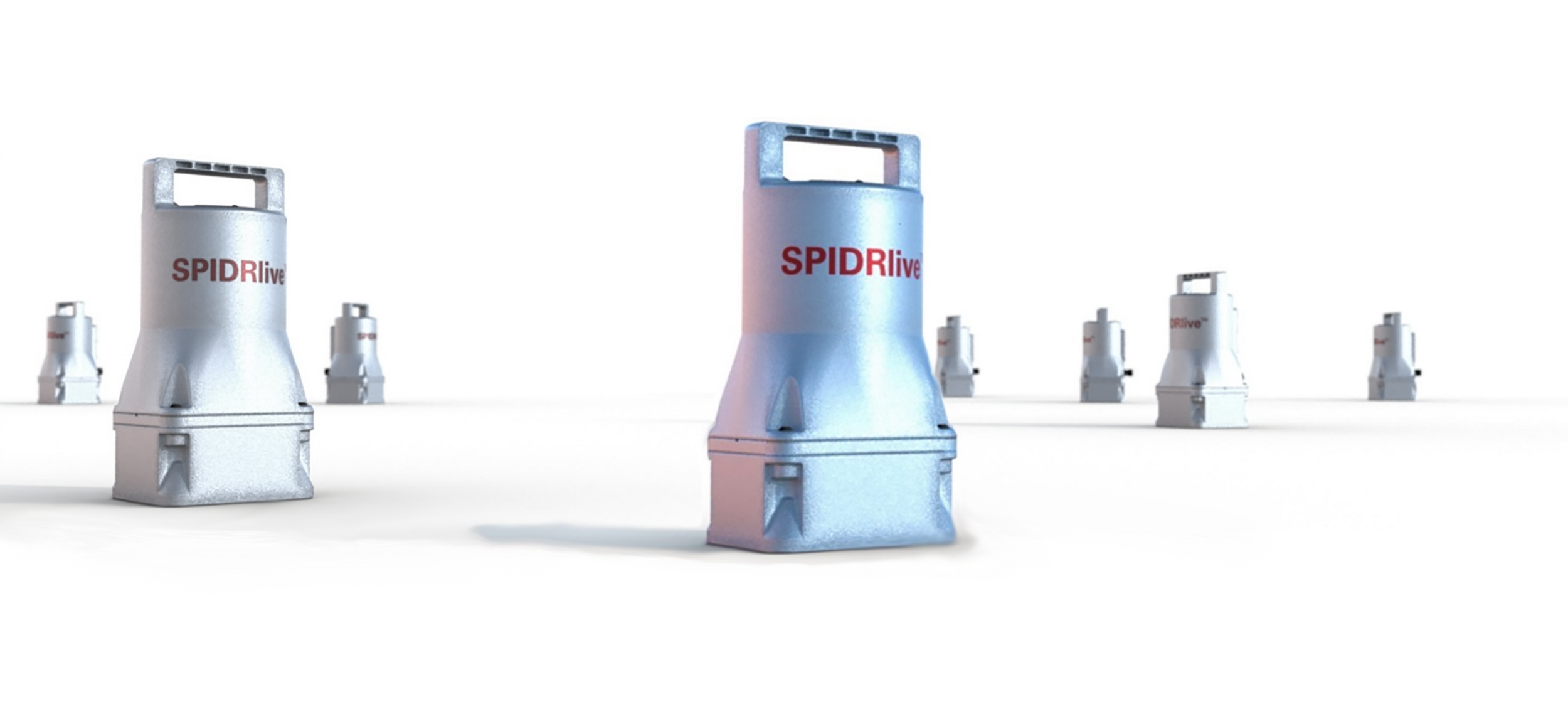
Acquire real-time well data without the need for intervention during frac interaction monitoring
talk to an expertSPIDRlive is an unconventional well testing and fracture interaction monitoring technology that acquires real-time well data without the need for intervention. It helps reduce costs and improve fracture understanding for greater recovery. The SPIDRlive retriever combines quartz-based hardware and proprietary modeling software to capture high-resolution, high-accuracy and high-frequency data from the wellhead without running downhole equipment.
SPIDRlive builds on all the same quartz performance specifications of the classic SPIDR and adds the ability to remotely view a livestream from your mobile device data through the cloud to a secure web-based dashboard. It enables you to see what’s happening at your wellsite as it happens. SPIDRlive is ideally suited for frac interaction monitoring applications.
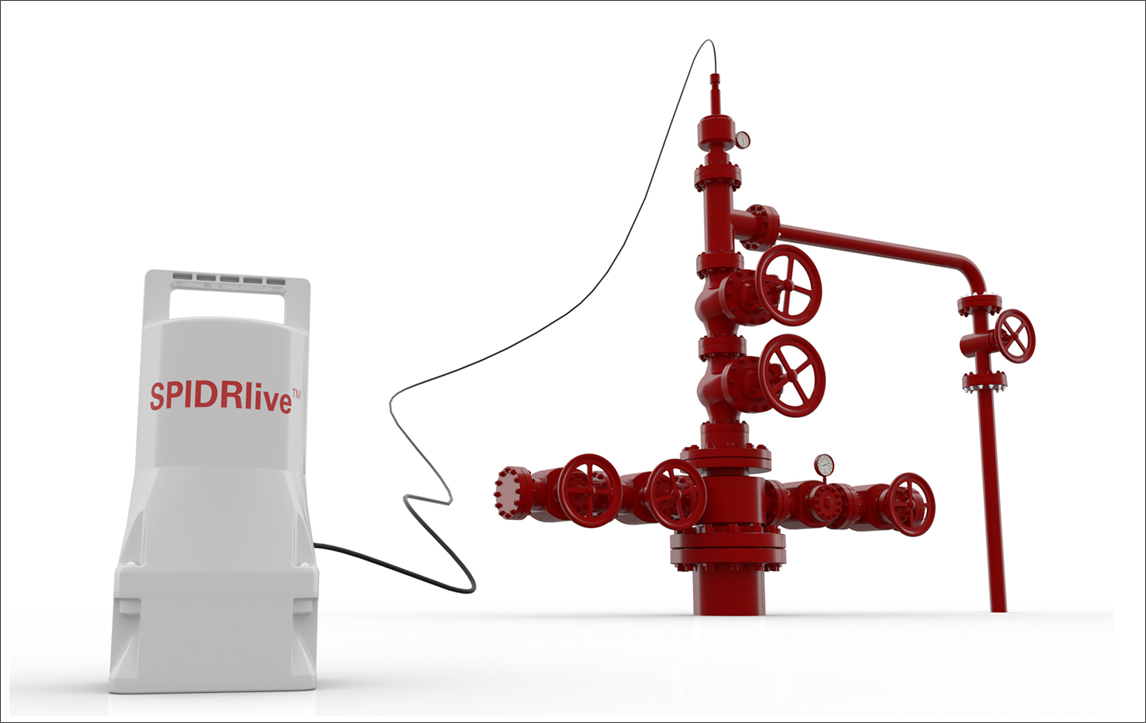
Halliburton introduces the SPIDRlive self-powered intelligent data retriever, an unconventional well testing and fracture interaction monitor
2:21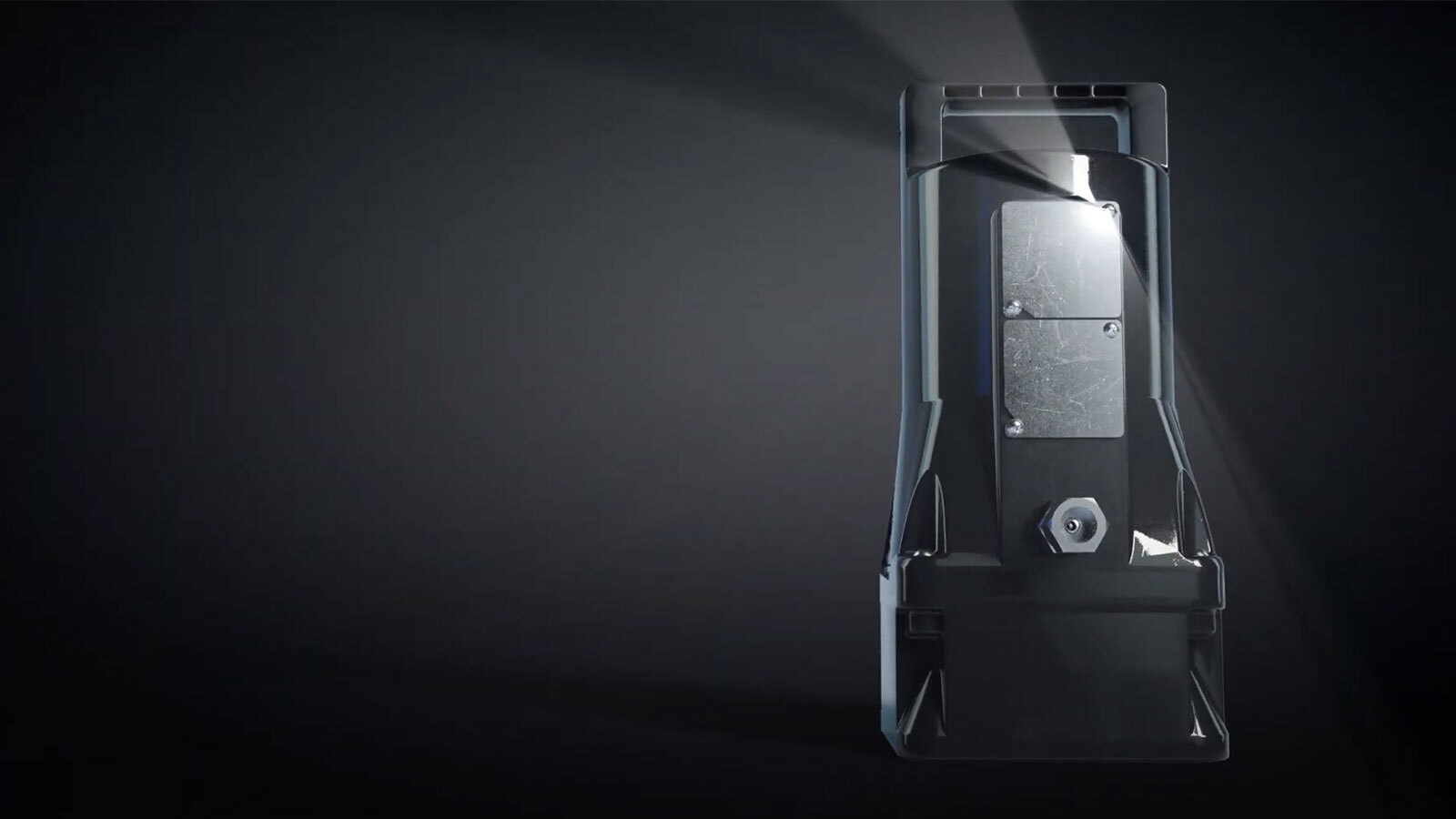
SPIDRlive is a streaming unconventional well test data retriever that captures high-resolution, high-accuracy and high-frequency data from wellhead without downhole equipment. Real-time monitoring optimizes fracturing performance and enhances reservoir understanding.
SPIDRlive specifications | |
Full-Scale Pressure | 10,000 or 15,000 psia |
Resolution | 0.01psi |
Accuracy | 0.025% of full scale |
Transducer | Quartz |
Memory Capacity | 16,000,000 data sets (in single mode) |
Nominal Sampling | 1 sample per second |
Power | 8 x alkaline D-cell batteries |
Thermal Compensation | Indicated pressures unaffected by ambient temperature changes within the operating ambient temperature range |
Operating Temperature Range | -20F to 130F |
Connections | ½” NPT connection for 10,000-psi 9/16” autoclave for 15,000-psi |
Communication | Wireless to the Edge; cellular from Edge to the Cloud |
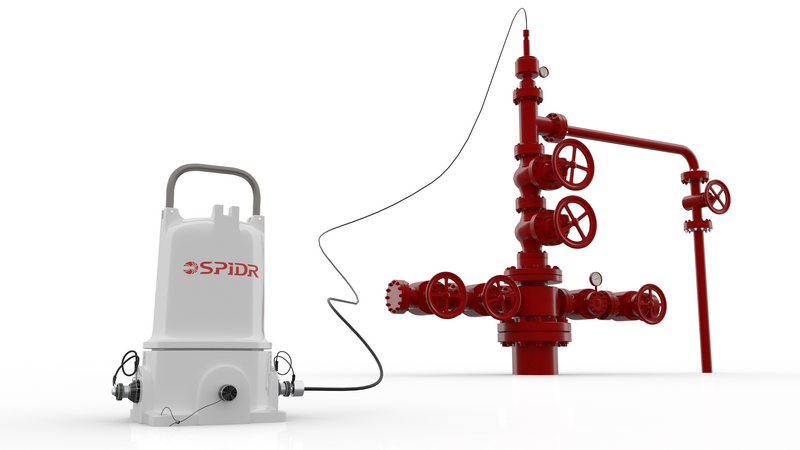
During diagnostic fracture injection testing (DFIT), acquire high resolution pressure data at the wellhead during flowing and shut-in.
Improve short and long-term well performance, reduce damage to the completion and formation, and increase production.